
Research & Impact
Dr. Jenny Hall conducts community-engaged research designed to improve understanding of ticks, tick-borne diseases, and associated conditions, and to translate what is learned into meaningful education, resources, and action.
Her work brings together scientific evidence, surveillance data, lived experiences, and public health practice to identify gaps, understand local and regional risks, and develop evidence-informed approaches that advance tick-borne disease education, prevention, and care.
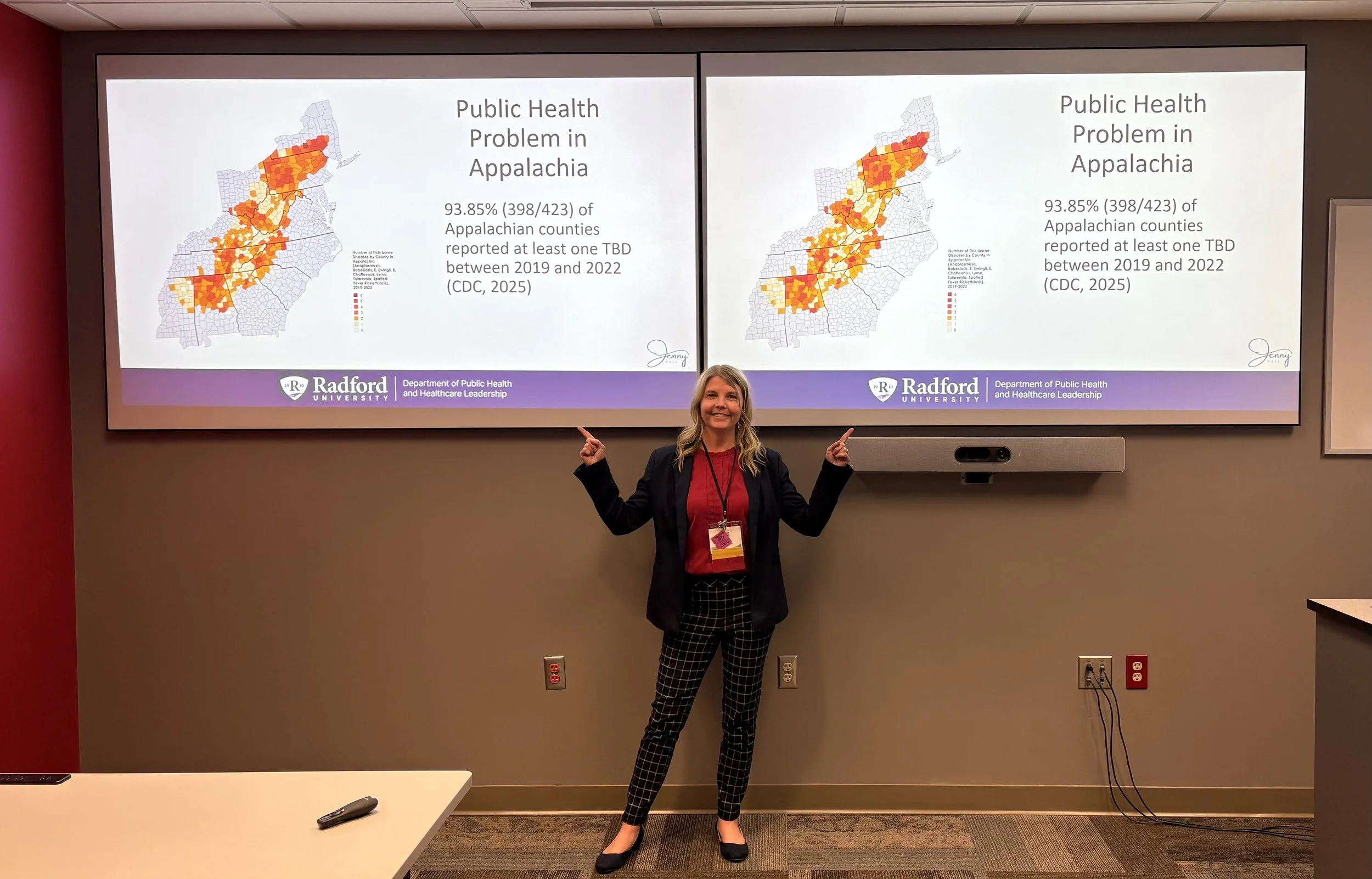
Dr. Hall presenting a geographic analysis of reported tick-borne diseases across Appalachia at the Appalachian Regional Research Translation Network Conference in 2025.
Lived Experience Research
Dr. Hall’s research centers the experiences of people affected by tick-borne diseases and associated conditions. Her studies have gathered perspectives from well over 1,000 adults and caregivers about their experiences with diagnosis, treatment, disease management, quality of life, and well-being, including extensive research on the mental, emotional, and social impacts of alpha-gal syndrome.
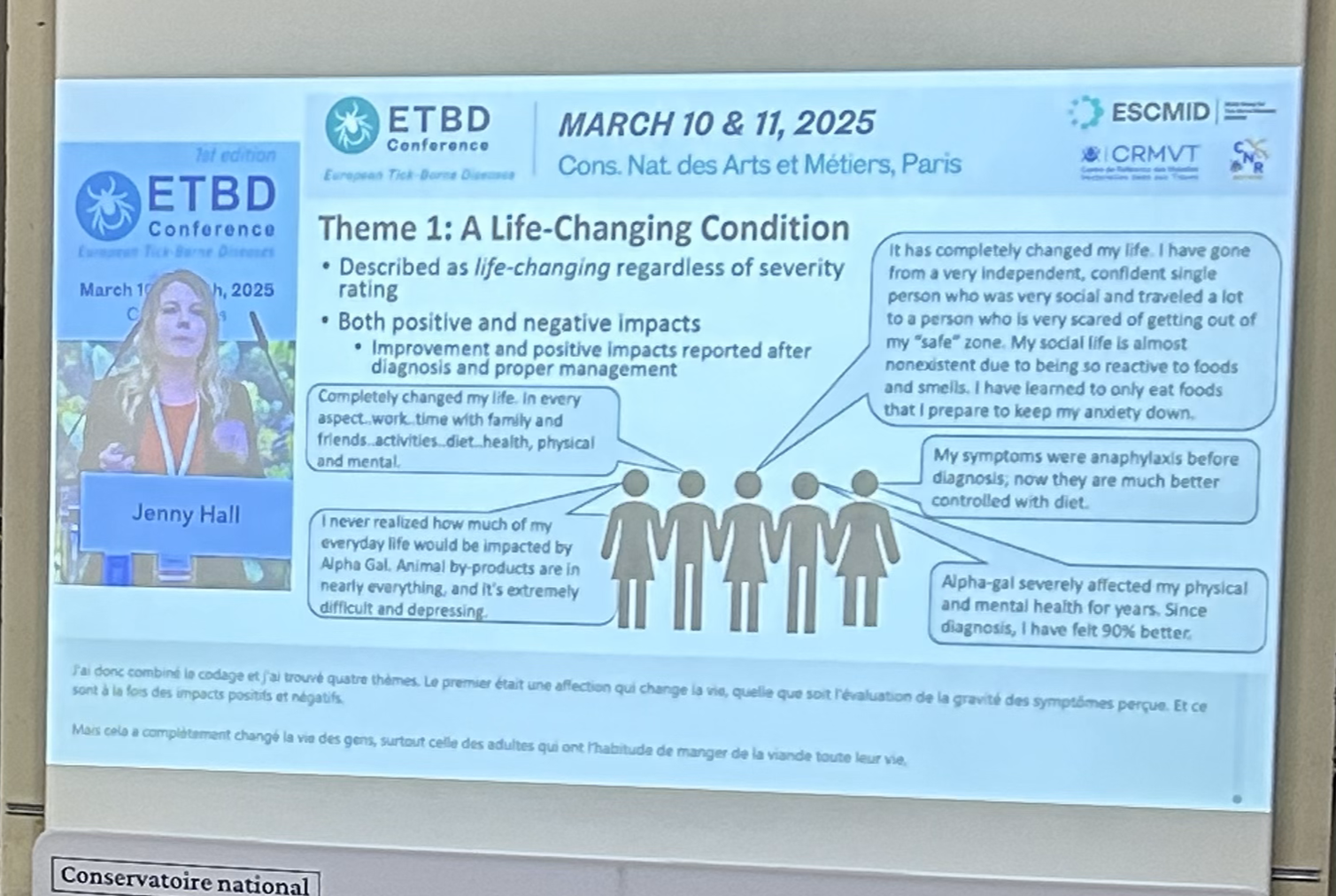
Dr. Hall presenting research on the lived experiences of adults with alpha-gal syndrome at the first European Tick-Borne Disease Conference in Paris, France.
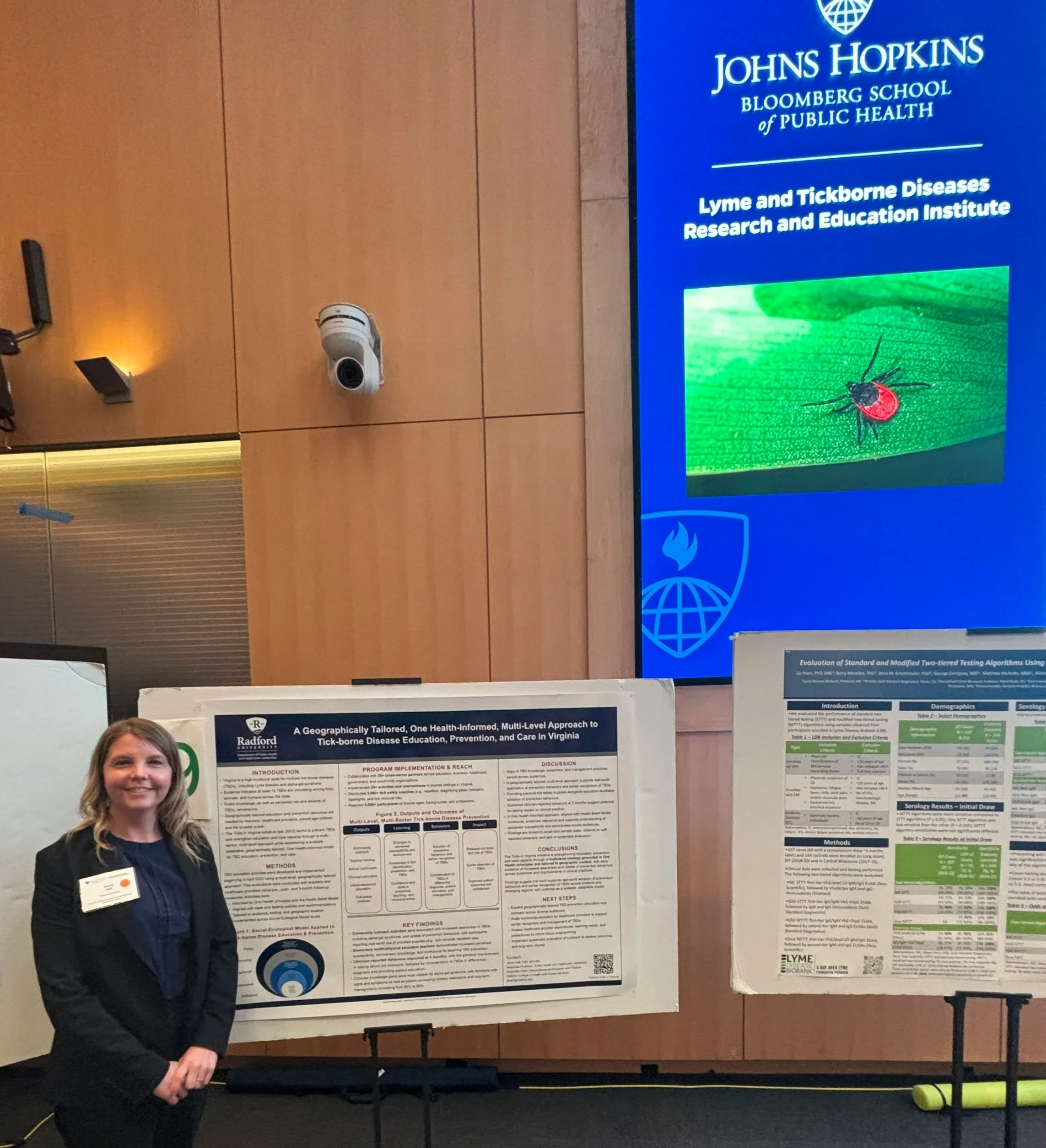
Dr. Hall presenting her multilevel, multisector, geographically tailored, One Health–informed framework to advance tick-borne disease education, prevention, and care at the Johns Hopkins Ticks and Tick-Borne Diseases Symposium in 2026.
One Health Research and Education
Using a One Health approach, Dr. Hall examines connections among human health, animal health, ticks, wildlife, environmental conditions, geographic patterns, and lived experience. She translates these interconnected sources of evidence into geographically tailored education for healthcare professionals, public health practitioners, employers, educators, and communities.
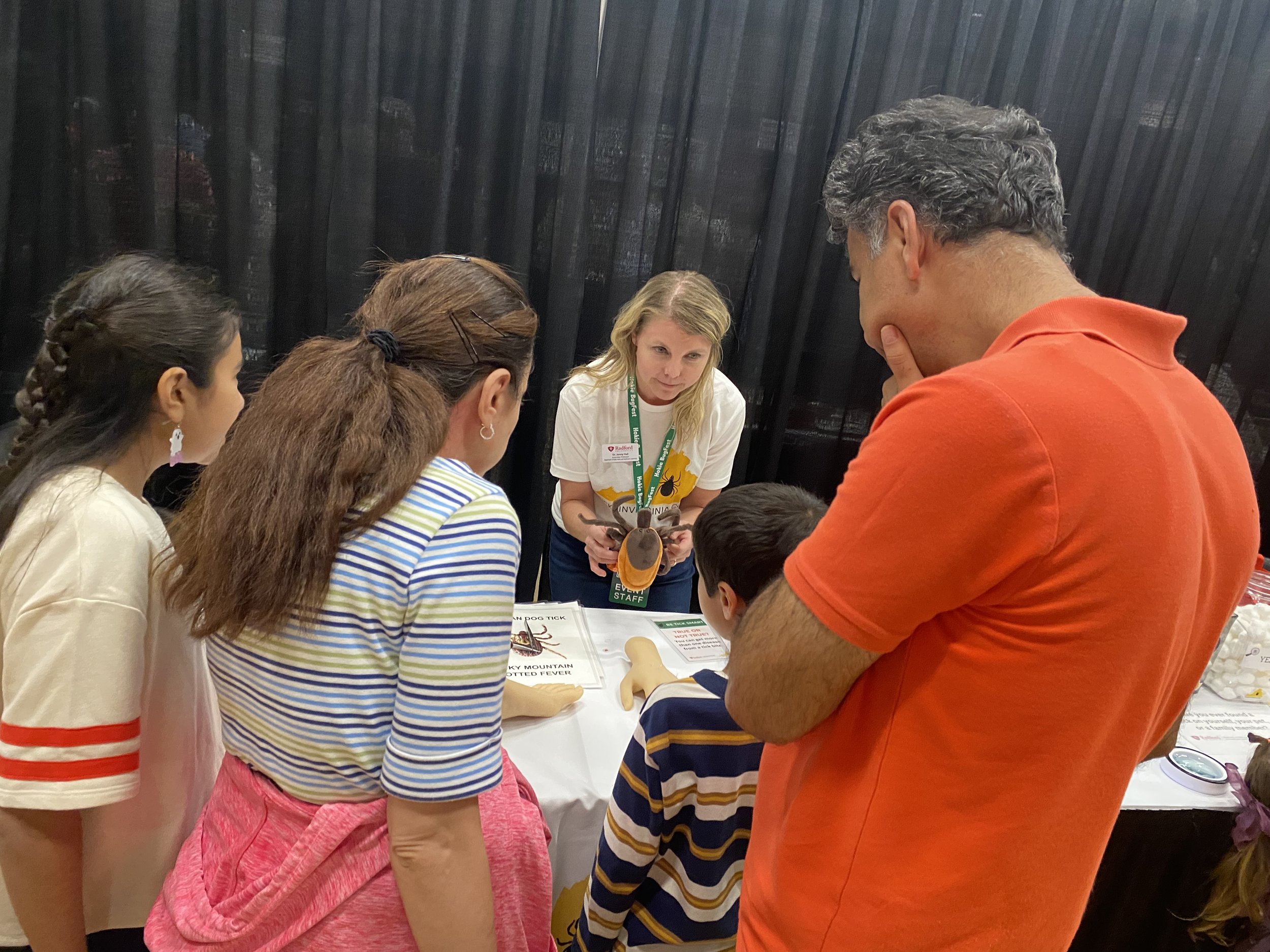
Dr. Hall engaging with children and families at Virginia Tech’s Hokie BugFest.
From Research
to Community Action
Dr. Hall works to move research beyond academic settings. Findings from her studies and surveillance projects have informed educational resources, professional education, community presentations, workplace initiatives, school-based materials, and partnerships, including the installation of tick education and warning signs at public parks and trails.
Research That Reaches People
Through Ticks in Virginia, Dr. Hall translates research into evidence-informed, audience-tailored resources and educational programs for healthcare professionals, employers and workers, schools and families, community organizations, and people affected by tick-borne diseases. Her presentations, workshops, outreach events, and educational resources have reached thousands of people, expanding access to practical information that supports greater understanding, informed prevention, and improved care.